

The science of wash and seal
An oxidative wash that breaks down surface pesticide residues, followed by a thin, food-grade edible coating that slows moisture loss — run as six steps on a single line.
Patented TechnologyPatent No. 202611121692Six steps, one continuous line
Steps 1–3 clean the surface. Steps 4–6 protect it.
Receiving & pre-rinse
Produce is received, sorted and pre-rinsed to remove soil, field dust and loose debris before treatment.
Oxidative wash
Vegetables pass through an aqueous oxidative wash that degrades pesticide residues on the surface and reduces the microbial load.
Potable rinse
A potable-water rinse carries away the oxidant and the breakdown products, leaving a clean surface.
Edible coating dip
Cleaned vegetables are dipped in a four-component, food-grade edible coating that forms a thin protective film.
Forced-air drying
Forced air sets the film evenly across the surface so the coating performs consistently.
Pack & store
Treated produce is packed in ventilated containers for cool storage and distribution.
Oxidative wash
OZOVEG uses oxidants of the kind already used worldwide for water treatment. Dissolved in water, they attack the chemical bonds that hold many pesticide molecules together — for example, the sulphur–phosphorus bonds of organophosphates and the double bonds found in many other pesticide classes.
Breaking these bonds converts the parent compound into smaller, more polar and generally less toxic products that rinse away more easily.
- Degrades surface pesticide residues
- Reduces spoilage and pathogenic microbes on the surface
- Keeps the wash water itself from becoming a source of cross-contamination
- Ozone decays back to oxygen and leaves no persistent residue
Bond-breaking chemistry
Oxidants target unstable bonds in pesticide molecules, turning them into simpler, water-soluble fragments.
Controlled wash water
Oxidative wash water stays sanitary across the batch instead of spreading spoilage from one vegetable to the next.
A four-component edible coating
Once the surface is clean and dry, a thin layer is applied that the consumer can eat without noticing. Each food-grade component has a defined role — together they preserve texture, colour and taste without synthetic preservatives.
Film former
A natural polysaccharide from the cluster bean forms a semi-permeable barrier that slows water loss and moderates gas exchange, so the vegetable respires more slowly.
Firmness keeper
An organic lactate strengthens plant cell walls and helps hold firmness and crunch.
Surface guard
An organic acid lowers surface pH, discourages microbial growth and slows enzymatic browning.
Moisture holder
A natural osmolyte found in beetroot helps tissues retain water and tolerate stress during storage.
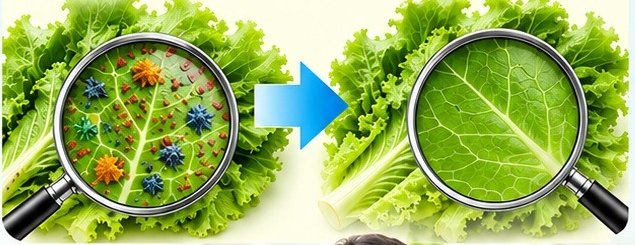
Never seal in what should be washed out
Coating a vegetable that still carries residue or a high microbial load would simply seal those in. By placing the oxidative wash and potable rinse first, OZOVEG ensures that the protective layer is laid over a surface that has already been cleaned.
Where OZOVEG fits
Bring OZOVEG to your line
Talk to our team about trials, line integration and validation for your crops.